


Prostatitis is a disease associated with inflammation of the prostate gland.It can develop in men of any age and can be chronic or acute in nature.There are problems with diagnosis, so patients often turn to a doctor when prostatitis is in an advanced form and traditional treatment does not help.The danger is the high probability of developing prostate cancer and complete infertility.
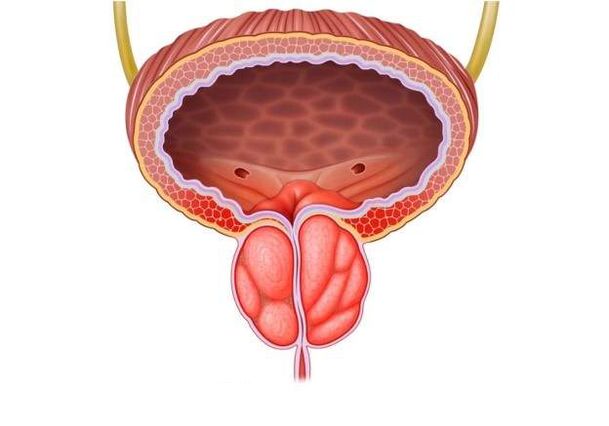
If prostatitis is diagnosed in time, the treatment lasts only 2 weeks, after which the man should only follow the doctor's recommendations and undergo periodic examinations.In this case, there will be no complications after prostatitis - even if prostatitis occurs with acute symptoms, reproductive abilities are fully preserved.
Prostatitis does not develop out of nowhere;the cause of the inflammatory process is E. coli, mycoplasma, streptococci, staphylococci, trichomonas and other pyogenic microorganisms.Their feature is very fast reproduction and rapid destruction of prostate tissue.The main causes of the disease are:
- any inflammatory diseases of the urinary system - cystitis, pyelonephritis, urethritis;
- chronic fecal disorders - especially constipation, men have a strong need to push, and prostatitis develops in response to organ pressure;
- infections from remote foci - when prostatitis is directly related to the penetration of infectious agents into the tissue of the gland, tonsillitis, pneumonia, severe forms of influenza;
- often hypothermia or, on the contrary, overheating - may be related to the characteristics of work activity;
- lack of regular sexual activity, physical inactivity - prostatitis causes stagnation of secretions in the tissues of the prostate gland and is often the cause of prostatitis in a 40-year-old man;
- weakened immunity due to severe hormonal imbalance;
- sexually transmitted infections - gonorrhea, trichomoniasis, chlamydia;
- frequent urination - an enlarged bladder exerts strong pressure on the prostate gland;
- pelvic injuries.
Most often, prostatitis develops after the infection penetrates the prostate tissue through the urethra, less often it occurs through the bloodstream or lymphatic system.Prostatitis has a very important provoking factor - a general weakening of the immune system, if it occurs as a reaction of the body to stress, constant fatigue, nervous exhaustion, emotional outbursts.
Men should have a regular sex life and active lifestyle.Otherwise, stagnation of secretion occurs in the tissues of the prostate gland, which is an ideal environment for the reproduction of pathogenic microorganisms - prostatitis develops rapidly.Inevitably, prostate cells experience oxygen starvation, which increases the chance of prostatitis spreading outside the organ - inflammation will also affect nearby organs.
Types of prostatitis in men, features of its course
Depending on the origin, there are several types of prostatitis:
- bacterial prostatitis - begins against the background of penetration of the infection into the prostate tissue;diagnosis of this type of prostatitis often occurs in young and old men;
- congestive prostatitis - caused by a sedentary lifestyle, lack of regular sex life in men and pelvic injuries often accompanied by infection, and then prostatitis turns into a mixed type;
- calculous prostatitis - develops as a result of an untreated chronic form of the disease;Such prostatitis is more common in older men.
According to the form of occurrence, prostatitis is divided into acute and chronic.Diagnosis of the acute form of the disease is rare;treatment should be carried out only in hospital conditions, because prostatitis occurs with severe symptoms.Chronic prostatitis is characterized by a "slow" clinical picture, periodic remissions, complete absence of specific symptoms, and rapid transformation into serious problems - degeneration of healthy prostate cells into malignant ones, cessation of secretion production, and decreased sperm secretion.
Symptoms and diagnosis of inflammation of the prostate gland
Symptoms directly depend on which type of prostatitis begins to develop in the tissues of the prostate gland:
- bacterial prostatitis - high body temperature, presence of blood or pus in the urine, problems with urination (thin and weak flow, "drip" urine output), sharp pain in the perineum, poor general health;
- calculous prostatitis - weak erection or its complete absence, blood in the urine, such symptoms of prostatitis are more common in men aged 50 and older;
- congestive prostatitis - discomfort in the perineum and testicles, partial or complete absence of erection, improper urination.
Chronic prostatitis is distinguished by a "blurred" clinical picture;not all symptoms are expressed and can be bothersome from time to time.However, if men have pain in the groin and testicles for 2-3 months, the general body temperature rises and libido decreases, it means that you should consult a doctor, confirm the diagnosis of "chronic prostatitis" and be treated.It is worth knowing the following nuances:
- Symptoms of prostatitis in 50-year-old men are a weakened erection and a feeling of heaviness in the groin, but the pain may be completely absent;
- The symptoms of prostatitis in 30-year-old men are always acute, and the first symptom is urinary incontinence: the enlarged prostate puts pressure on the bladder, and men simply cannot go to the toilet;
- Men in their 60s may not have symptoms of prostatitis - at this age, prostatitis is often chronic, but the complete absence of an erection can be a concern.
The doctor can prescribe effective treatment only after diagnosing the disease - prostatitis often has symptoms of other diseases of the genitourinary system.Therefore, only patient complaints are not enough to make a diagnosis;the following are defined:
- rectal examination;
- laboratory examination of prostate secretion;
- analysis to identify/reject sexually transmitted infections;
- ultrasound examination of the prostate;
- computed tomography of the body.
Ultrasound examinations of the pelvic organs and testicles can be prescribed as additional examinations.Specialists may need to be involved to rule out or confirm co-morbidities.
Treatment - general principles, duration of the course
The symptoms of prostatitis in a man and its treatment are directly related, because when prescribing therapy, the doctor must first alleviate the general condition of the patient.Men often have severe pain, which means that treatment should begin with painkillers.How to treat prostatitis is determined by a urologist or andrologist, and in most cases the following drugs are prescribed:
- non-steroidal anti-inflammatory drugs and diuretics - prostatitis is manifested by urinary disorders;
- antispasmodics and muscle relaxants - prostatitis is accompanied by severe pain in the groin;
- supports prostate functionality and alpha-blockers.
Is erectile dysfunction due to prostatitis treatable?Yes, for such complaints, the doctor prescribes special drugs that improve blood supply to the genitals and clean the veins of the prostate gland from waste and toxins.If symptoms of prostatitis are detected in 40-year-old men, additional drugs will not be needed to restore erection - all sexual abilities will be restored after the inflammatory process is stopped.However, if the cause of prostatitis in 30-year-old men is sexually transmitted diseases (sexually transmitted infections), then in order to restore sexual activity, it is necessary to undergo additional treatment for the identified infection.
The best treatment is comprehensive, and therefore you should follow some doctor's recommendations to stop prostatitis as soon as possible:
- drink at least 2 liters of fluid per day - prostatitis is characterized by stagnation of secretions and will have to be quickly removed from the tissues to reduce the load on the body and reduce swelling;
- observe bed rest - treatment cannot be combined with physical activity, as this will irritate the body, prostatitis will only progress, which will make the treatment long and ineffective;
- exclude spicy, sour, fatty foods, alcohol from the diet - these are also irritants, which cause prostatitis to worsen.
As soon as the symptoms of the disease become less noticeable, sexual activity should be resumed.If you ensure regular drainage of the prostate gland and do not allow even a slight stagnation of secretion in its tissues, prostatitis will heal faster.
If treatment with drugs does not give a positive result, prostatitis often occurs in a chronic form with relapses, then this leads to surgical intervention.The operation can be of two types:
- transurethral resection - the surgeon removes the prostate tissue affected by prostatitis;
- prostatectomy - prostatitis poses a real threat to a person's life, so his prostate gland and seminal vesicles are completely removed with adjacent tissues.
Operations are not performed at a young age, because this can lead to complete infertility - prostatitis is treated with therapeutic methods, in addition to drugs, physiotherapeutic procedures can be prescribed. How long to treat prostatitis depends on the stage and form of the disease, degree of neglect.Treatment usually lasts 2 weeks, but this number is very average.
It is possible to treat prostatitis completely, it is only important to consult a doctor in time.Treatment should be determined individually;traditional methods will not help to stop prostatitis, but they can accelerate the onset of complications.